Una campagna di Adriano Clemente
ContattiRecupera la tua password
Inserisci il tuo indirizzo email: ti invieremo una nuova password, che potrai cambiare dopo il primo accesso.
Password inviata
Controlla la tua casella email: ti abbiamo inviato un messaggio con la tua nuova password.
Potrai modificarla una volta effettuato il login.


KALEIDOSCOPE: Music for Imaginary Films
- Raccolti € 7.674,00
- Sostenitori 103
- Scadenza Terminato
- Modalità Raccogli tutto Informazioni
Raccogli tutto
Il tuo contributo servirà a sostenere un progetto ambizioso. Scegli la ricompensa o la somma con cui vuoi sostenerlo e seleziona il metodo di pagamento che preferisci tra quelli disponibili. Ti ricordiamo che il progettista è il responsabile della campagna e dell'adempimento delle promesse fatte ai sostenitori; sarà sua premura informarti circa come verranno gestiti i fondi raccolti, anche se l'obiettivo non sarà stato completamente raggiunto. Le ricompense promesse sono comunque garantite dall’autore.
- Categoria Startup & business
Il Progetto
A sonic journey through jazz, contemporary, and global traditions.
After producing four albums rooted in Jazz and Afro-Cuban idioms, I am returning to the sounds that define my original musical path. KALEIDOSCOPE: Music for Imaginary Films is my most personal and ambitious project yet: a 3-CD box set spanning decades of compositions, research, and passion.
My musical language is a mosaic built from diverse traditions, from 1970s Progressive Rock to the Avant-garde, and from Jazz to the intricate structures of Hindustani Raga. This work is also a dialogue with the masters who inspired me, including Terry Riley, Igor Stravinsky and Frank Zappa.
The Collection: Three Worlds of Sound
CD 1: Kaleidoscope - Recent works built around five Kaleidoscopes which, much like the shifting patterns of a spinning lens, are compositions featuring sections that may seem unrelated, yet form a cohesive, vibrant whole. Listen to the extracts:
CD 2: Akashmani - Opening with Maharaj Express, a tribute to India, this disc features the Akashmani Suite. Originally composed for keyboards in the 90s, this sequence was completely rearranged for a large ensemble in 2015, bridging the gap between digital memory and acoustic reality. Listen to the extracts:
CD 3: Children of Africa - An exploration of rhythmic roots. This volume includes the suite Cuadros Cubanos, inspired by my travels to Cuba, and delves deep into the African traditions that remain the heartbeat of global music. Listen to the extracts:
The Production & Your Support
The recording process began in 2024 in Rome and continued through 2025. Due to the technical complexity of these compositions, the editing and post-production phase has taken nearly two years of meticulous work.
Producing a project of this scale independently is a monumental challenge. Your contribution is more than just a pre-order; it is a direct investment in independent art. The funds raised will help cover the substantial costs of recording sessions, professional editing, and physical manufacturing.
I decided to rely on “crowdfunding” to start from the ground up but aim high. Anyone who has done crowdfunding knows that those who participate will receive a reward in return. On the page here beside, you’ll find all the rewards I’ve thought up for you, things you might like and could make you happy.
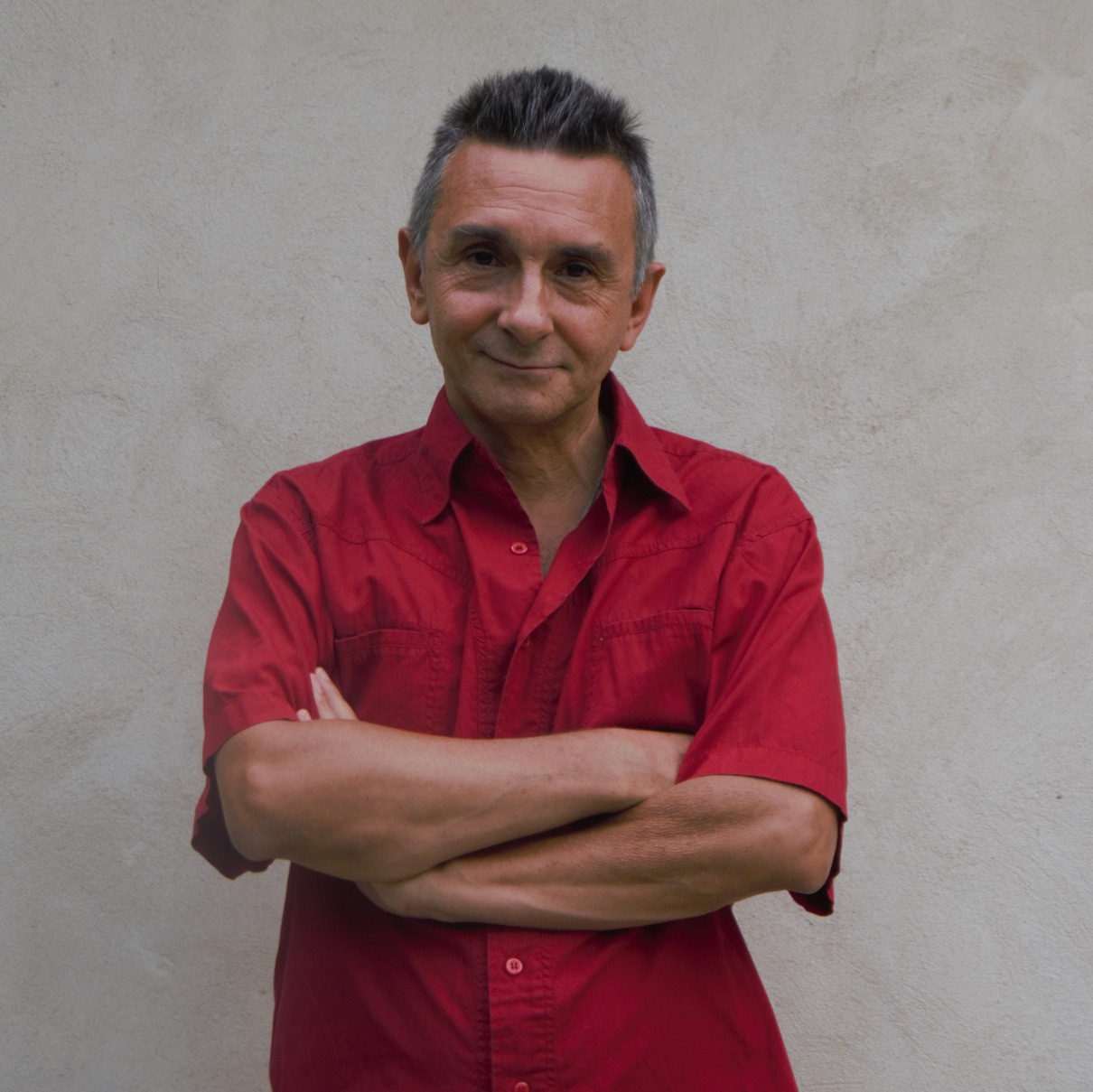
My Bio: Adriano Clemente, composer and multi-instrumentalist
I was born in Lecce in 1958 and grew up in Naples. Although I did not receive formal musical training in childhood, I began playing guitar and piano at an early age and composed my first songs in the early 1970s.
In 1974, I started setting poems by William Blake to music, and later formed a band that performed in Naples and Rome between 1978 and 1980. In 1982, I began studying Indian classical music, focusing on the sarod and training in the khyal vocal style. In 1986, I collaborated with Costantino Albini on the soundtrack for the television film Cinque Piccoli Indiani, directed by Paolo Brunatto. In 1991, I further deepened my knowledge of Indian ragas through the study of the dhrupad vocal tradition with Ritwick Sanyal.
In 1996, Amiata Records released my audio cassette Akashmani: Across the Sky (ARNR 2496), featuring minimalist compositions in the tradition of Terry Riley and Steve Reich, performed on Yamaha and Roland keyboards.
In 2000, I began formal studies in piano and jazz harmony, and subsequently took up the saxophone. In the following years, I also studied trumpet and trombone. In 2011, I founded the Akashmani Jazz Ensemble, which performed at various venues until 2014.
In April 2015, my Mingus Suite was recorded in Rome by an Italian all-star ensemble. The CD The Mingus Suite was released in May 2016 (Dodicilune ED357) and received wide critical acclaim.
In December 2015, I recorded a series of compositions in Havana with leading Cuban musicians, including pianist Leyanis Valdés, granddaughter of Bebo Valdés. The album Havana Blue was released in February 2017 (Fonosfere by Dodicilune FNF111).
During a second trip to Havana in December 2016, I recorded Cuban Fires, conceived as a sequel to his first Latin jazz project. It was released in July 2018 (Fonosfere by Dodicilune FNF114).
In the summer of 2021, I invited renowned tenor saxophonist David Murray and drummer Hamid Drake to participate in the recording of his large-scale composition The Coltrane Suite. The work was recorded in Rome in September and released as a double CD titled The Coltrane Suite and Other Impressions in May 2023 (Dodicilune ED542), receiving excellent reviews in Italy and internationally.
Since 2024, I have been recording my compositions written in a post-minimalist and contemporary style, including music for strings which appears in a CD titled The Gift: Music for Strings released in 2026 (Aulicus Classics, ALC 0166).
Questo progetto ha segnalato obiettivi di sviluppo sostenibile
Gli obiettivi di sviluppo sostenibile (SDGs) costituiscono una serie di 17 obiettivi concordati dall'Organizzazione delle Nazioni Unite.
4. Istruzione di qualità
Istruzione di qualità: garantire a tutti un'istruzione inclusiva e promuovere opportunità di apprendimento permanente eque e di qualità.
8. Lavoro dignitoso e crescita economica
Buona occupazione e crescita economica: promuovere una crescita economica inclusiva, sostenuta e sostenibile, un'occupazione piena e produttiva e un lavoro dignitoso per tutti.
16. Pace, giustizia e istituzioni forti
Pace e giustizia: promuovere lo sviluppo sostenibile.

Commenti (7)